Assassin(s) Crew Denies Political Intent as Conservative Backlash Grows
The crew behind Assassin(s) issued a statement on the 28th saying the film was not made with any political purpose. The historical thriller, which opened on the 23rd, has drawn sharp criticism from conservative politicians over its conspiracy-inflected take on a 1974 assassination.

The production team behind Assassin(s) issued a formal statement on the 28th denying that the film carries any political agenda, asking audiences to view it "only as a work of creative fiction." The statement came as the controversy surrounding the film extended beyond online debate into the National Assembly, with members of the People Power Party calling for an apology and a halt to screenings.
The film, directed by Hur Jin-ho (8 August Christmas, Duckbill Princess) and produced by Hive Media Corp, the company behind The Man Standing Next (2020) and 12.12: The Day (2023), opened on the 23rd and had drawn 1.56 million viewers by the 27th. It stars Yoo Hae-jin as a detective, Park Hae-il as a newspaper editor, and Lee Min-ho as a junior reporter.
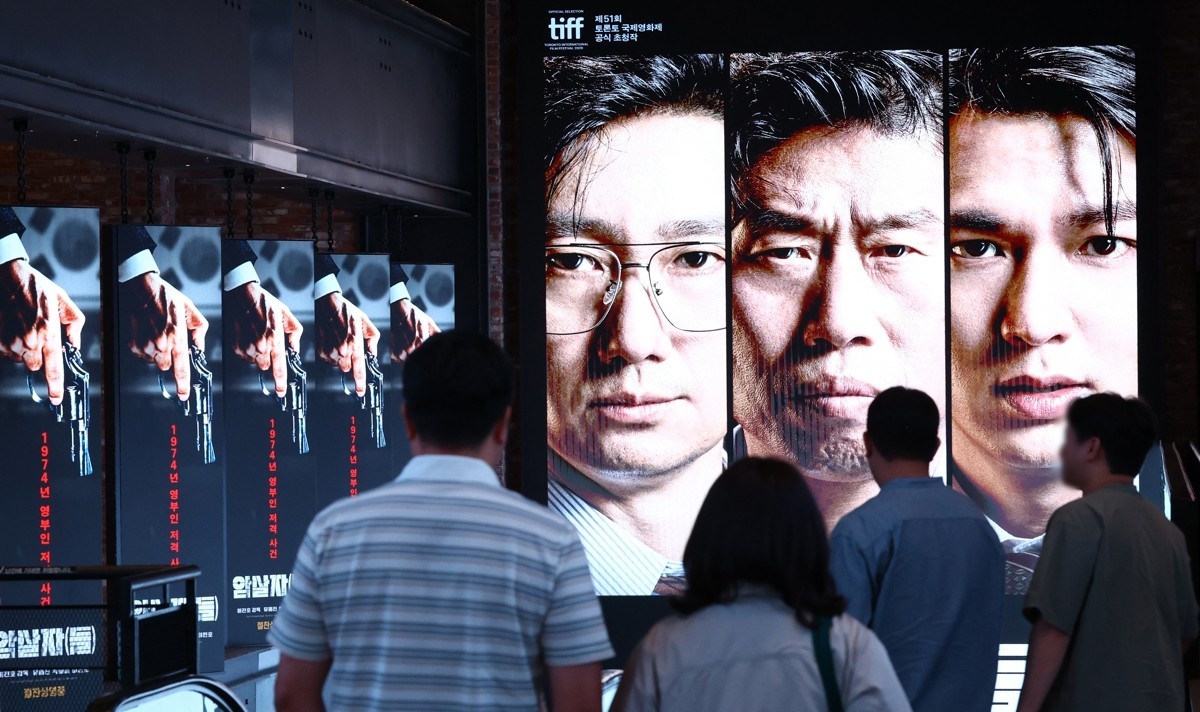
What the film depicts
Assassin(s) is built around the real events of August 15, 1974, when Mun Se-gwang, a second-generation Korean Japanese, fired a gun at President Park Chung-hee during a Liberation Day ceremony in Seoul. The shot missed Park but struck and killed his wife, Yuk Young-soo. The official investigation concluded that Mun acted under orders from North Korea and the General Association of Korean Residents in Japan, known as Chongryon.
The film does not dispute that account outright, but it dramatizes an alternative reading that has circulated in various forms since classified diplomatic documents were declassified in January 2005, some 31 years after the event. Characters within the story raise the possibility that Yuk Young-soo was struck not by Mun's bullet but by a presidential bodyguard's shot, and that Park Chung-hee may have orchestrated the attempt on his own wife to resolve a political crisis. The film ends without committing to either version, leaving the insinuation unresolved.
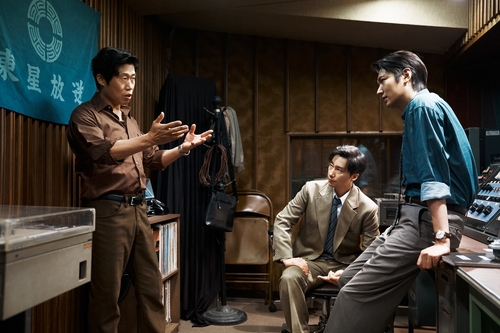
The crew's position
In their statement, the production team said the film "does not newly establish a specific historical conclusion, nor does it deny or distort established facts." They added that no character in the film is identified as the definitive mastermind of the assassination, and that the hypotheses presented are not offered as historical truth.
They described their research process as wide-ranging, drawing on public records, books, and documentaries, then combining real events and figures with fictional characters and situations. "Because the work is based on historical events and real individuals," the statement reads, "diverse interpretations and criticism are possible. The production team respects such opinions."
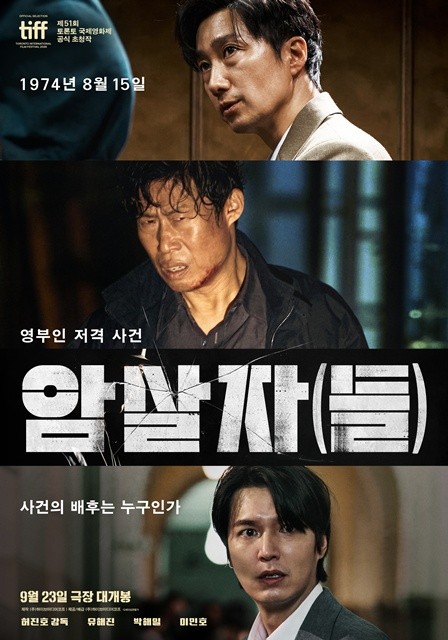
The political response
That careful framing has not satisfied critics on the right. People Power Party representative Yoo Yeong-ha, a close associate of former President Park Geun-hye, said the film "clearly crossed a line that must be maintained to preserve community," and warned that "accountability will follow." Party leader Jang Dong-hyeok posted on Facebook drawing a contrast between prosecutorial responses to criticism of former President Roh Moo-hyun and what he characterized as a double standard applied to content involving Park Chung-hee.
The Park Chung-hee Presidential Memorial Foundation issued its own statement on the 28th demanding a public apology from the production company and an immediate end to screenings, calling the film "a distortion of a historical tragedy that inflicted irreparable pain" on the former president and his family.
The audience response online tells a different story, at least by one measure. Verified ticket-buyer ratings on Naver stand at 8.4 out of 10. The general public score on the same platform is 2.4. The gap reflects a pattern that has become recognizable in Korean film discourse: organized low-rating campaigns targeting politically sensitive releases. Whether that dynamic is at play here, or whether the split reflects a genuine divide in public sentiment, is something the box office over the next few weeks will begin to answer.
Trending Now
- 1
T.O.P and Nana Have Been Dating for 5 Months After His Music Video Shoot
K-Pop · October 2, 2026
- 2
Kwon Mina Claims She Was Sedated: '11 Years Is Different From One Incident'
K-Pop · September 27, 2026
- 3
Yoo Seung-jun Posts Wife's Photo and Apology After 22 Years
K-Pop · September 26, 2026
- 4
Where to Actually Buy Korean Fashion Online
K-Fashion · August 24, 2026
- 5
Lee Changseob Built a Likable Image for Years: One Episode Dented It
K-Pop · September 27, 2026
More from Soo Park
AI-Voiced Song Reaches Melon Top 20, Competing Alongside IU and Top K-Pop Acts
K-Pop · October 2, 2026
Anna From MISAMO Called the Best-Looking Celebrity in Getty Images
K-Fashion · October 2, 2026
Choi Jun-hee Marks 18 Years Without Her Mother With a Childhood Memory
Culture · October 2, 2026
End of story. The omonar! Desk.
Don’t hear it from the group chat.
Comebacks, castings and chaos, filed by the desk.
Weekly · Free · Leave whenever