Hyun Bin's Gray Two-Button Suit and the 6 Classic Rules Behind It
Fashion columnist Jung So-young used Hyun Bin's gray two-button suit at the Made in Korea 2 press conference as a masterclass in what classic menswear requires. Short socks, she says, are where she draws the line.

A well-dressed man walked onto a TV set, sat down on the sofa, and his bare ankle appeared. That was the moment fashion columnist Jung So-young stopped hearing anything he said.
The image stayed with her, and it frames the argument she makes in this piece: wearing a suit correctly is not a matter of personal taste, any more than arriving at the wrong answer to a maths problem is a matter of personal taste. The rules exist, they have a history, and ignoring them is not the same as transcending them.
Where the suit came from
The modern suit's ancestor is the tailcoat, a garment so rigidly formal that the whole point of the lounge suit, which eventually replaced it as everyday dress, was to soften that rigidity. The lounge suit was, in its origins, the casual option. That history matters because it explains why the surviving rules carry weight: they are what remained after everything unnecessarily stiff had already been stripped away.
What remained is a fairly specific list. On a two-button or three-button jacket, the bottom button stays undone. On a double-breasted jacket, same rule for the last button. The shirt collar stays inside the jacket lapel. A half-inch of shirt cuff shows below the jacket sleeve. Nothing goes under the shirt. Socks must be long enough that no skin appears regardless of how the wearer sits or moves. A tie lands at roughly the midpoint of the belt buckle, with a dimple pressed into the knot. Wearing a suit without a tie, under classic rules, is an error. Shoes are lace-ups.
That is a long list, Jung concedes, and it reads a little like parental instruction. But asking "why does any of this matter" is, she argues, the wrong question. These are conventions that accrued over a long time and became the grammar of the garment.
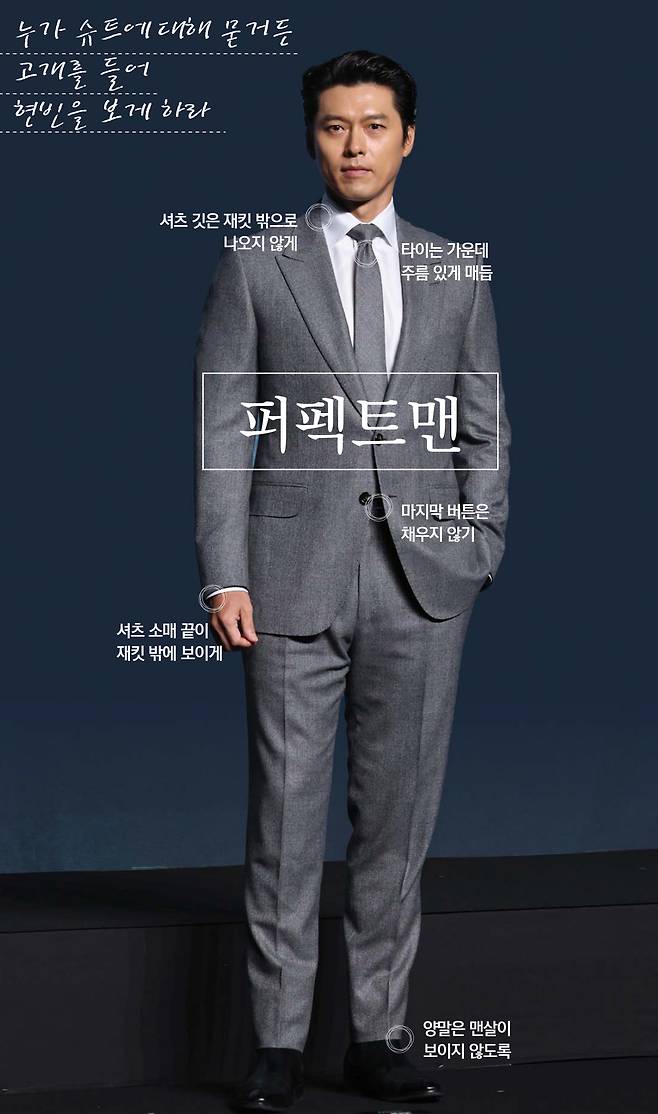
Hyun Bin as the reference point
For a working example of all of it done correctly, Jung points to the press conference for Disney+ series Made in Korea 2, held earlier this month. Hyun Bin arrived in a gray two-button suit and, by her reading, gave a clinic. The fit, the shirt collar, the trouser break, the shoes: nothing to correct. She notes, with some dryness, that his physical presence helps, but the point is that the styling choices themselves were sound before his face entered the equation.
The other cast members at the same event, including Jung Woo-sung, Woo Do-hwan, No Jae-won, and Jung Sung-il, mostly chose suits as well, though several went for looser interpretations. A round-neck knit in place of a shirt. No tie. These departures, Jung argues, read well precisely because they are deliberate variations on a form the wearers clearly understand, not errors made in ignorance. Context is everything: a suit with sneakers can work, and for a period it was genuinely fashionable. What does not work is a classic suit worn with the confidence of someone who does not know where the bottom button rule comes from.
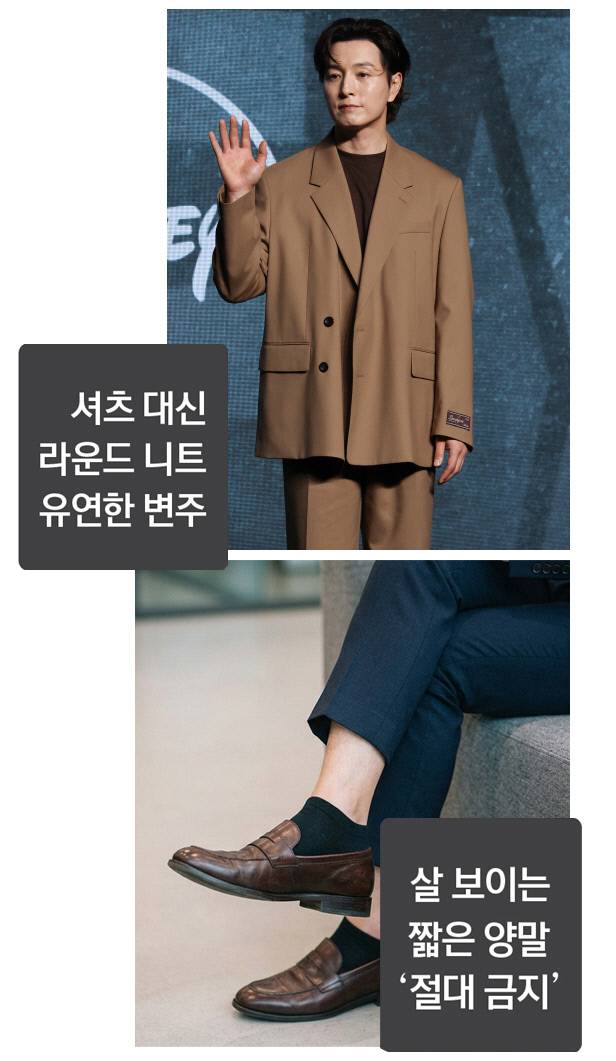
The one rule she will not bend on
The column's conclusion is measured. Suits and personal expression can coexist. Omitting a tie is fine. Swapping a shirt for a knit is fine. Wearing sneakers is fine, depending on the context. Jung is willing to leave a considerable amount to individual taste.
The short sock, however, is not negotiable. It was the detail that ended her ability to follow a television interview, and it is the detail she closes on. Learn the history, find a role model who wears it correctly (she has given you one), then adapt from there. But keep the socks long. She says please.
More from Seo-Yun Baek
Lee Na-young Wows With Leggy Look at Damiani Jewelry Event
K-Fashion · September 16, 2026
Song Hye-kyo's Hair Creates Buzz: Did She Cut It Again?
K-Fashion · September 13, 2026
All-White Everything: Han So-hee's Boucheron Debut Answers Her Critics
K-Fashion · September 11, 2026
End of story. The omonar! Desk.
Don’t hear it from the group chat.
Comebacks, castings and chaos, filed by the desk.
Weekly · Free · Leave whenever