So Ji-sub's 'Kim Bu-jang' Tops Netflix Non-English Charts for 2 Weeks Straight
So Ji-sub's action drama 'Kim Bu-jang' has claimed the No 1 spot on Netflix's global non-English TV chart for two consecutive weeks, logging 9.1 million views in the most recent tracking period. On domestic television, the show hit a 22.3% rating in its sixth episode, making it the second-highest-rated SBS Friday-Saturday drama in the network's history. The show is part of a broader wave of Korean dramas putting middle-aged men front and center, and audiences can't get enough.

So Ji-sub's action thriller Kim Bu-jang has become one of the most-watched Korean dramas of the year, and the numbers back it up. For the week of July 6–12, the show logged 9.1 million views on Netflix's non-English TV chart, holding the top spot for the second week running, a notable feat for a series that is not a Netflix original.
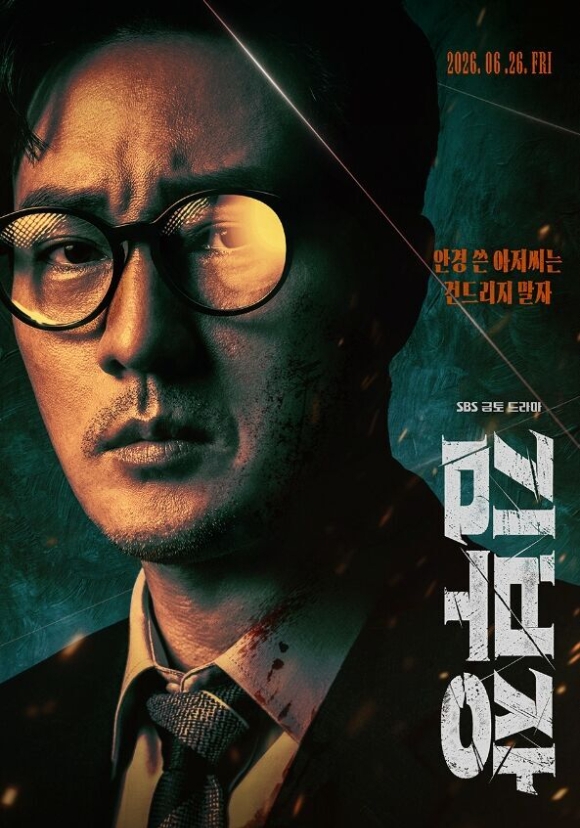
On domestic television, Kim Bu-jang peaked at a 22.3% rating in its sixth episode, landing it at second place among all SBS Friday-Saturday dramas ever aired. It crossed 20% by its fourth episode, making it one of the fastest-rising dramas in the network's recent memory. The show is currently ranked #1 in 22 countries, including South Korea, the Philippines, Singapore, and Qatar, and has cracked the top 10 in 72 countries total.
The premise is built around a familiar but satisfying inversion. Kim Bu-jang (So Ji-sub) is a former special agent living a deliberately ordinary life as a salaryman, dismissed by his coworkers as a rigid, uncool "ajeossi" (middle-aged man) behind thick-rimmed glasses and a plain suit. When his daughter goes missing, the disguise comes off. Based on a webtoon of the same name, the show channels that gap between how society underestimates a man and what he is actually capable of, a fantasy that has clearly resonated well beyond Korea's borders.
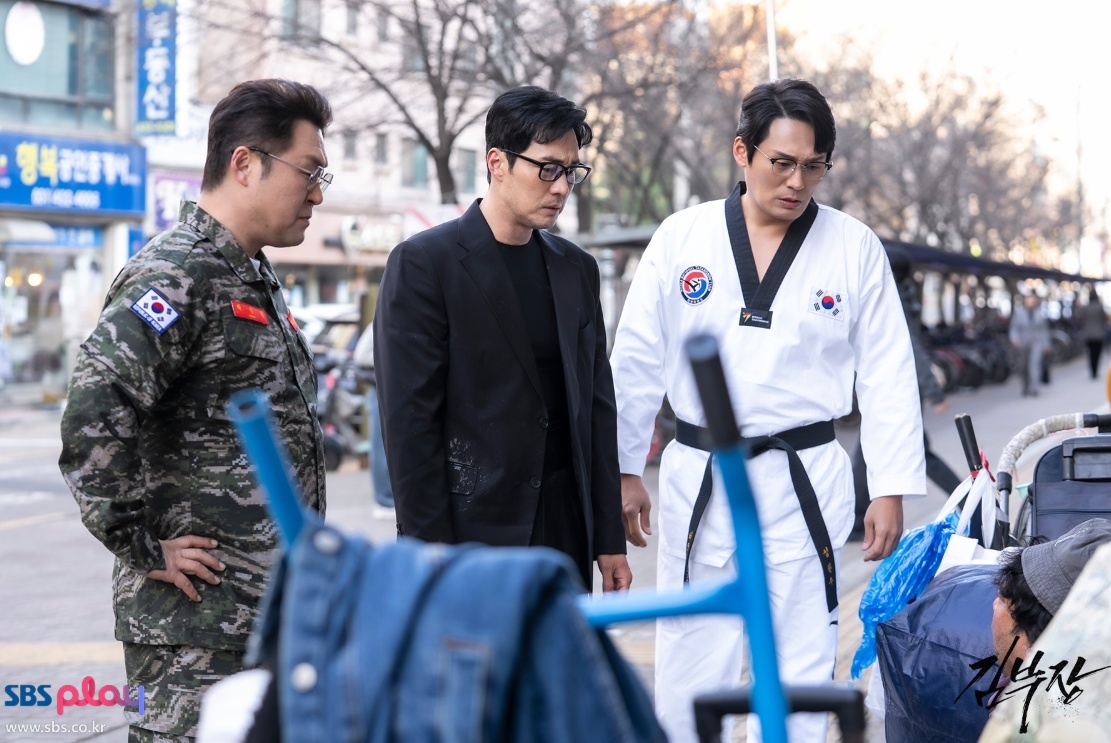
He is not fighting alone. Two old allies join him: Seong Han-su (Choi Dae-hoon), a former taekwondo gold medalist, and Park Jin-cheol, a retired soldier once called "the god of the battlefield." When Kim Bu-jang tells them his daughter has been taken, both men commit without hesitation. Cultural critic Ha Jae-geun points out that the three-man structure does real emotional work: "The social hardships and everyday difficulties of the ordinary man are easy for viewers to empathize with, and the release they feel watching these characters act, doing what the audience can't, is what drives the ratings."
Drama critic Yoon Seok-jin, a professor of Korean literature at Chungnam National University, agrees that the trio format is part of what makes the storytelling land: "The three-person dynamic elevates the appeal by giving each character a defined role, which keeps the narrative clean and engaging." Professor Lee Seong-min of Korea National Open University adds that the male-bonding networks in these dramas have a verisimilitude rooted in recognizable real-world relationships, and that three is simply a more structurally stable number than the classic two-person buddy setup.
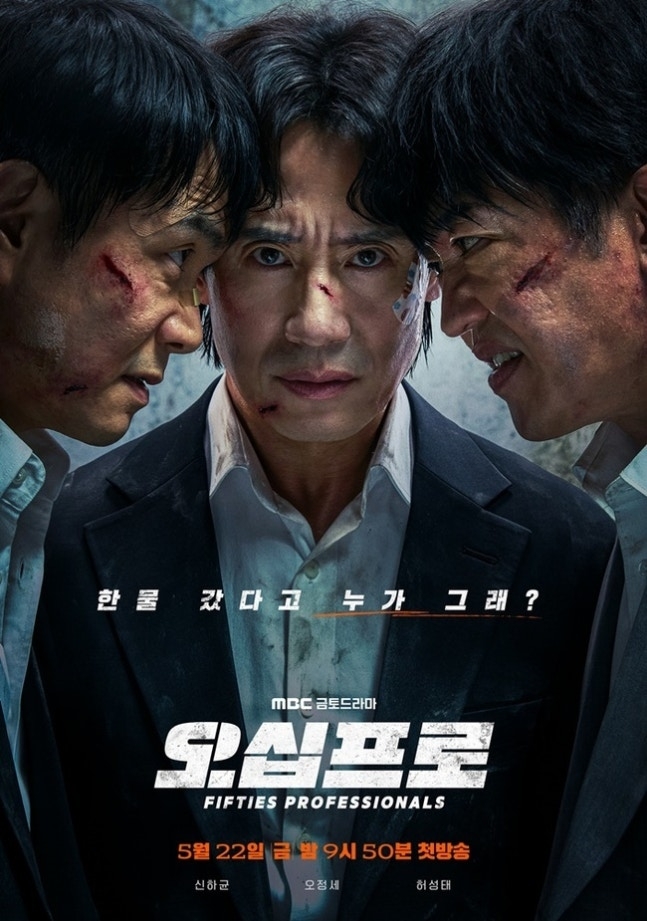
Kim Bu-jang is not the only drama riding this wave. MBC's 50 Percent, which wrapped last month, followed three middle-aged men, a Chinese restaurant chef, an office worker, and a convenience store owner, who turn out to have classified pasts as a NIS black-ops agent, a North Korean special operative, and a former crime boss respectively. Starring Shin Ha-kyun, Oh Jung-se, and Heo Sung-tae, the show used the same template: unremarkable-looking men with extraordinary hidden histories, rediscovering their abilities through solidarity. Last year, JTBC's Mr. Kim Who Lives in His Own Seoul Apartment and Works at a Major Conglomerate drew attention for a quieter version of the same archetype, following a 50-something corporate employee through demotion, forced retirement, and real-estate fraud.
There is also a structural explanation for why this genre is thriving on broadcast television specifically. Industry observers note that traditional TV viewership skews older than OTT platforms, and middle-aged protagonist dramas naturally align with that demographic. The growth of webtoon and web novel adaptations has added fuel: the source material tends to feature "munchkin" protagonists, characters with overwhelming, often hidden power, which translates well to action sequences and satisfying revenge arcs.
The comparison point critics reach for is tvN's My Mister (2018), which spent its entire run on the quiet weight of middle-aged life and became what many viewers call a "life drama." Kim Bu-jang is a different register, louder, more kinetic, built around physical release rather than emotional restraint, but the two shows share a genuine interest in what it costs to be a man in his fifties in contemporary Korea, and audiences on both sides of the Pacific have found something worth watching in that question.
Special recap episodes are scheduled for July 31 and August 1, ahead of the show's continuing run.
Elsewhere in this week's Netflix non-English top 10, Cham Gyoyuk (Real Education) held at second place with 3.6 million views across 51 countries. The reality dating show Never Been in a Relationship But Want to Date Season 2 debuted at eighth with 1.5 million views, and the JTBC drama Apartment entered the chart at tenth place with 1.4 million views just two days after its Netflix release. Korean-language content occupied four of the top ten non-English slots this week.
Trending Now
- 1
SM Gets US Court Order in 9 Days to Unmask RIIZE Seunghan Comeback Accounts
K-Pop · October 17, 2026
- 2
SHINee's Taemin Meets Son Heung-min After a Falcon Launch in a TAEMIN 93 Jersey
K-Pop · October 16, 2026
- 3
Kim Yoo-jung and Park Jin-young's 100 Days of Lies Tops Its Slot at 8.3%
K-Drama · October 13, 2026
- 4
Where to Actually Buy Korean Fashion Online
K-Fashion · August 24, 2026
- 5
Kim Ji-won's Doctor X Hits 15.1% in Three Episodes, Two Years After Queen of Tears
K-Drama · October 17, 2026
More from Min-Ji Han
Im Siwan's Heir Has a 3 Trillion Won Deal and a Body in His Cabinet
K-Drama · October 20, 2026
After Five Chapters of Boyhood, TXT Turn to Adult Anxiety on PERFECT STORM
K-Pop · October 20, 2026
NCT DREAM Take a Camper-Van Trip in 'The Sun' MV Before Nov. 9 Album
K-Pop · October 20, 2026
End of story. The OMONAR Desk.
Don’t hear it from the group chat.
Comebacks, castings and chaos, filed by the desk.
Weekly · Free · Leave whenever