From 'Praise of Death' to BTS: Korean Pop Music Turns 100 This Month
This August marks 100 years since soprano Yun Sim-deok recorded 'Sayichanmi' (Praise of Death), the song widely credited with catalyzing the spread of Korean popular music. She disappeared from a ferry days after the recording session, and the song sold 13,000 copies, an extraordinary number for the era, turning her unresolved death into the first major pop culture phenomenon in Korean history. The century that followed took Korean music from Japanese colonial suppression through US military stage shows to a global industry.

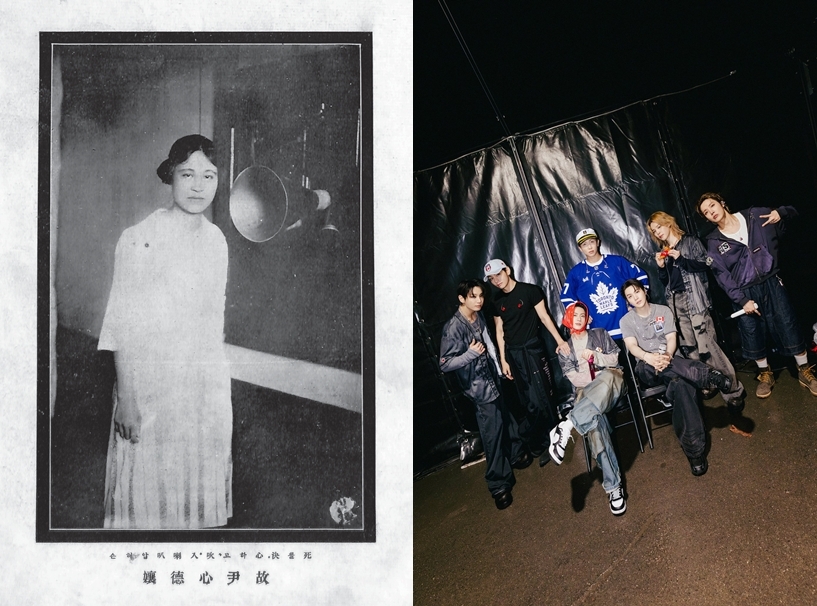
This August marks exactly 100 years since soprano Yun Sim-deok recorded a Romanian waltz melody with new Korean lyrics at the Ildong Gramophone Company in Osaka, then vanished from a ferry crossing the Korea Strait four days later. That song, Sayichanmi (사의 찬미, Praise of Death), sold roughly 13,000 copies according to contemporary newspaper accounts, a remarkable figure for a country where phonographs were still largely a luxury item, and in doing so lit the fuse for what would eventually become K-pop.
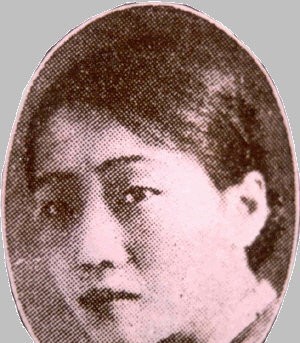
The anniversary provides a useful vantage point for tracing how Korean popular music traveled from colonial-era grief to global phenomenon across a single century.
The record that started Korean pop
Yun Sim-deok (1897–1926) was born in Pyongyang and grew up in a modest household where her mother's active involvement in the church became, as music critic Park Sung-seo notes, the unlikely conduit through which she encountered Western music. Selected as a government-funded student, she left for Tokyo in 1915, trained as a classical soprano, and returned home in 1921 as part of a touring troupe that performed across 25 cities. Contemporary newspaper accounts describe her solos stopping audiences cold.
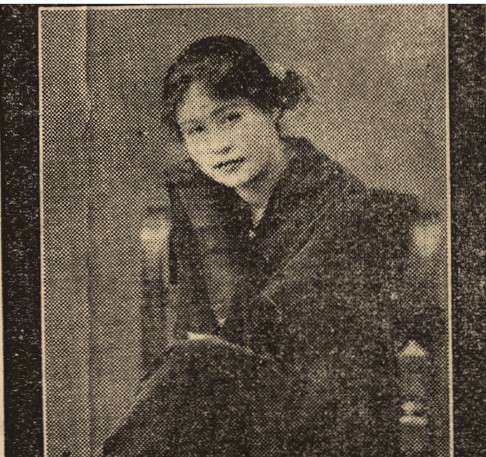
The recording of Sayichanmi was made on August 1, 1926, with her sister Yun Seong-deok accompanying on piano. The original source was a melody by Romanian composer Ion Ivanovici, best known for The Waves of the Danube. Park Sung-seo points out that Yun altered the song's rhythm from three-quarter to four-quarter time, deepening its mournful quality. Four days after the session, she and playwright Kim Woo-jin disappeared from a ferry traveling from Shimonoseki to Busan. No witness saw either of them go overboard. The circumstances have never been explained.
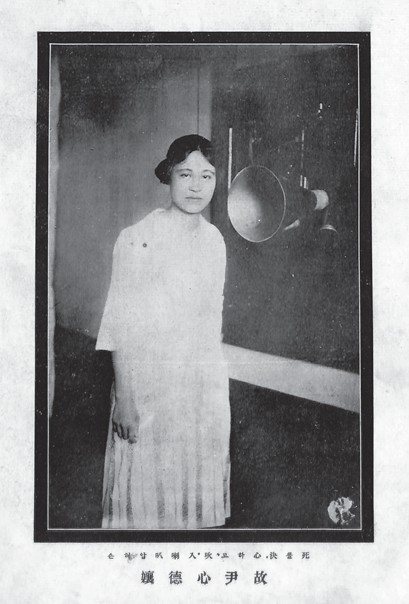
The record label moved quickly. The company inserted the phrase decisive solo performance on the sleeve and added text on the lyric sheet describing Yun as "Korea's only soprano virtuoso" who had "cast herself into the blue sea after singing her final Praise of Death." Park describes this as a deliberate amplification of tragedy for promotional effect, one of the earliest documented examples of what today would be called artist narrative marketing. The resulting sales surge, at a time when gramophone ownership was still concentrated among the wealthy, accelerated both the spread of the devices and general public interest in popular song. The following year, in 1927, the launch of the JODK Gyeongseong Broadcasting Station gave music a second distribution channel, and the two developments compounded each other.
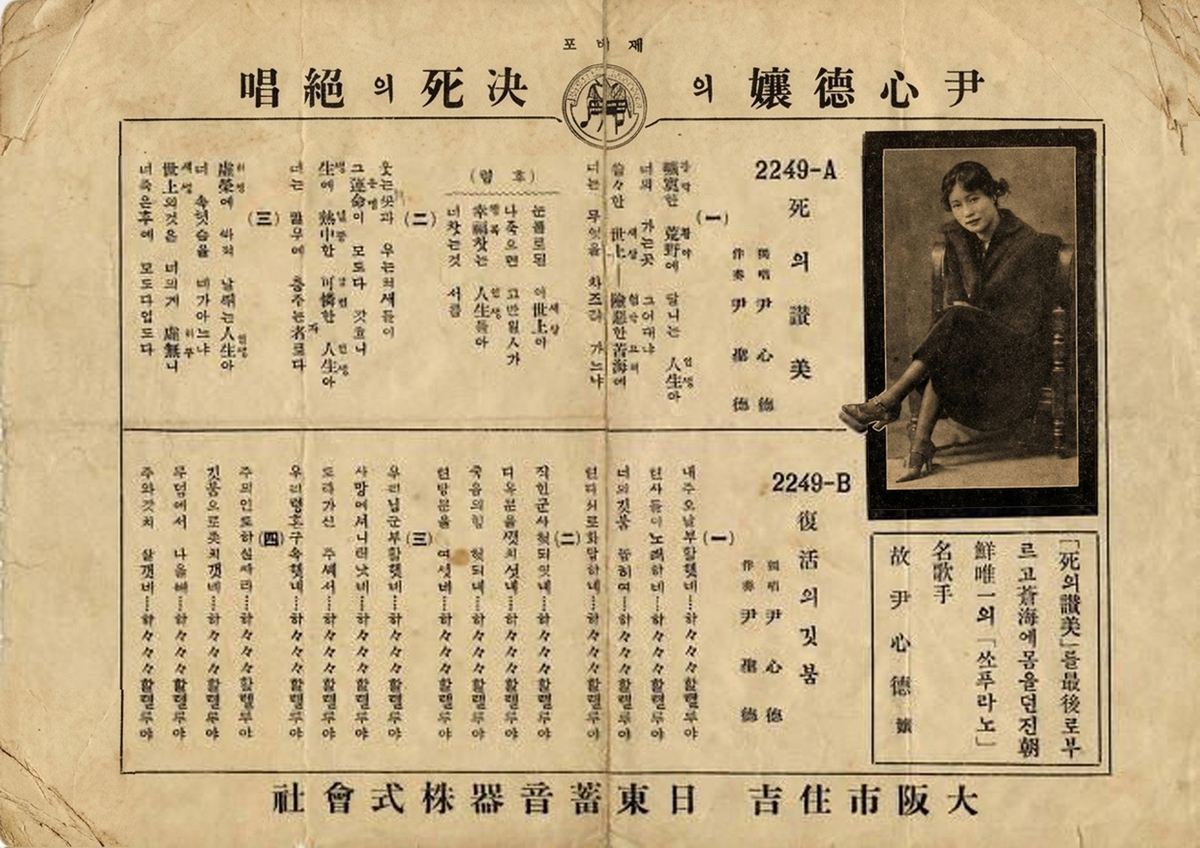
Park draws a careful distinction: Sayichanmi was not technically the first Korean popular recording, and claiming so overstates the case. But its cultural blast radius, 13,000 copies, a national conversation about two mysterious deaths, a wave of phonograph adoption, makes its centenary a reasonable marker for the start of popular music as a mass phenomenon in Korea.
Colonial grief and the US military stage
The songs that dominated the Japanese occupation era carried what Park calls an inherent melancholy, rooted in the conditions of colonial life. Hwangseong yet teo (황성옛터, Ruins of an Old Palace), sung by Lee Ae-ri-su and recorded in 1932 though composed earlier, used the image of a crumbling palace in Gaesong as a displaced metaphor for a country under occupation. Despite pressure from the Japanese colonial government, the song spread nationwide and became something close to a national hymn.
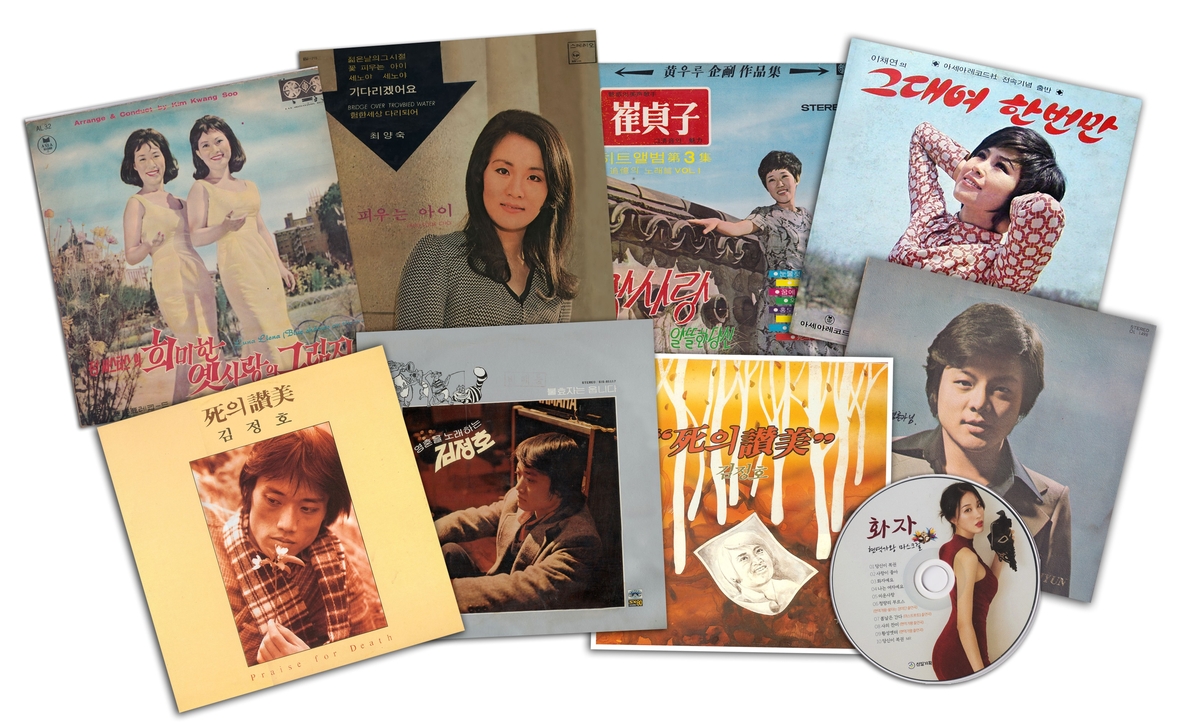
After liberation in 1945 and through the Korean War (1950–1953), the center of gravity in Korean music shifted to the US Eighth Army show circuit, stages set up to entertain American troops stationed in Korea. The shows functioned as an audition system with genuine consequences: artists had to pass evaluations conducted by US military entertainment officers before they could perform. Those who cleared the bar gained access to the best-equipped stages in the country, along with professional discipline in Western pop and jazz idioms that had no parallel elsewhere.
The list of artists who emerged from that circuit is significant. The Kim Sisters became early ambassadors of Korean performance in the United States. Patti Kim accumulated a string of firsts in Korean pop history. Han Myeong-suk's 1961 hit The Man in the Yellow Shirt is generally seen as the moment when Eighth Army performers crossed over into the mainstream civilian market. Yun Bok-hee helped set off a miniskirt fashion wave. The broader effect, as Park describes it, was a kind of Renaissance in Korean popular song: Western musical structures replaced Japanese-influenced ones, and a distinctly Korean pop vernacular began to take shape.
Rivals, rock bands, and the road to the 1980s
The Beatles' explosion in Western pop during the 1960s sent reverberations into Korea. Group sounds, the local term for rock bands, proliferated rapidly. The KeyBoys were branded the Korean Beatles. Shin Joong-hyun and the Add4, the Hi Five (later the Hi Six), and the Devils (who later served as the basis for the film Go Go 70) all had significant careers. Cho Yong-pil, who would become known as the King of Songs, got his start in a group called Kim Trio. The music café Séssibong produced a parallel folk tradition, launching artists including Yun Hyeong-ju, Song Chang-sik, and Jo Yeong-nam.
Set against this generational upheaval, the 1960s and 1970s also produced Korean pop's most discussed rivalry. Nam Jin, representing the Honam (southwestern) region, debuted in 1965 and sustained top billing through a run of hits across the decade. Na Hoon-a, representing the Yeongnam (southeastern) region, debuted in 1967 and rose quickly on a comparable string of successes, also crossing into film. Their competition divided audiences along regional lines in ways that went beyond music. Nam Jin's deployment to the Vietnam War with the Blue Dragon Brigade briefly created an opening that Na Hoon-a filled, and by 1972 the rivalry had sharpened further when Na Hoon-a moved to Nam Jin's own label, Jibe Records.
Cho Yong-pil dominated the 1980s. His commercial and critical standing was large enough that the gawang (가왕) title, King of Songs, attached itself to him rather than to either of the two rivals who had defined the previous decade.
Seo Taiji and the restructuring of Korean pop
The contemporary shape of K-pop is usually traced to Seo Taiji and Boys, who debuted in 1992 and introduced hip-hop and dance music to a domestic audience that had no ready framework for either. The disruption was institutional as well as sonic: their success pressured broadcasters and labels to rethink how they identified and developed talent.
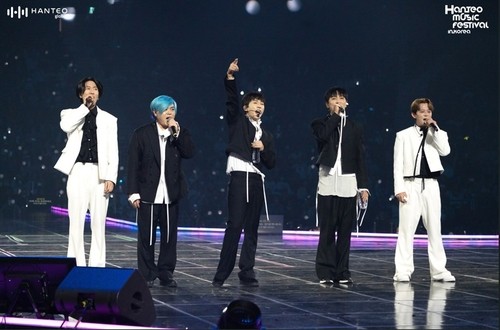
What followed in the 1990s was the idol system as it now exists. H.O.T., launched by SM Entertainment, is generally credited with opening the Korean Wave, the hallyu export of Korean cultural products, by building a fanbase model that was organized, merchandise-oriented, and capable of extending beyond Korea's borders. BTS, managed by HYBE (then Big Hit Music) and debuting in 2013, took that model to a scale that no one in the industry had projected: seven consecutive No. 1 albums on the Billboard 200, stadium tours across multiple continents, and a level of English-language media presence that would have been difficult to imagine even a decade earlier.
The arc from Sayichanmi to BTS is not a straight line. It runs through occupation and war, through the practical education of a US military circuit, through regional rivalries and rock waves and a single provocateur in a talent show who rewrote the rules in 1992. What the centenary clarifies, perhaps, is that Korean popular music has always been shaped by the specific pressures of its moment, colonial grief, postwar reconstruction, rapid industrialization, global connectivity, and that its current worldwide reach is less a sudden arrival than the latest turn in a long adaptation.
Trending Now
- 1
SM Gets US Court Order in 9 Days to Unmask RIIZE Seunghan Comeback Accounts
K-Pop · October 17, 2026
- 2
SHINee's Taemin Meets Son Heung-min After a Falcon Launch in a TAEMIN 93 Jersey
K-Pop · October 16, 2026
- 3
Kim Yoo-jung and Park Jin-young's 100 Days of Lies Tops Its Slot at 8.3%
K-Drama · October 13, 2026
- 4
Where to Actually Buy Korean Fashion Online
K-Fashion · August 24, 2026
- 5
Kim Ji-won's Doctor X Hits 15.1% in Three Episodes, Two Years After Queen of Tears
K-Drama · October 17, 2026
More from Soo Park
Why Does Kim Yoo-jung's Character Quit Over a Test Set by Her Own Allies in 100 Days of Lies?
K-Drama · October 19, 2026
Lee Jung-jae's Studio Drops 'Artist' From Its Name Less Than Two Years After Launch
K-Drama · October 19, 2026
Trauma Center Seasons 2 and 3 Shoot Together as Jeong Ye-in Replaces Ha Young
K-Drama · October 19, 2026
End of story. The OMONAR Desk.
Don’t hear it from the group chat.
Comebacks, castings and chaos, filed by the desk.
Weekly · Free · Leave whenever