Why Lee Jae-wook's Honey Job Is Landing Worldwide: Debt Is the Scariest Thing in It
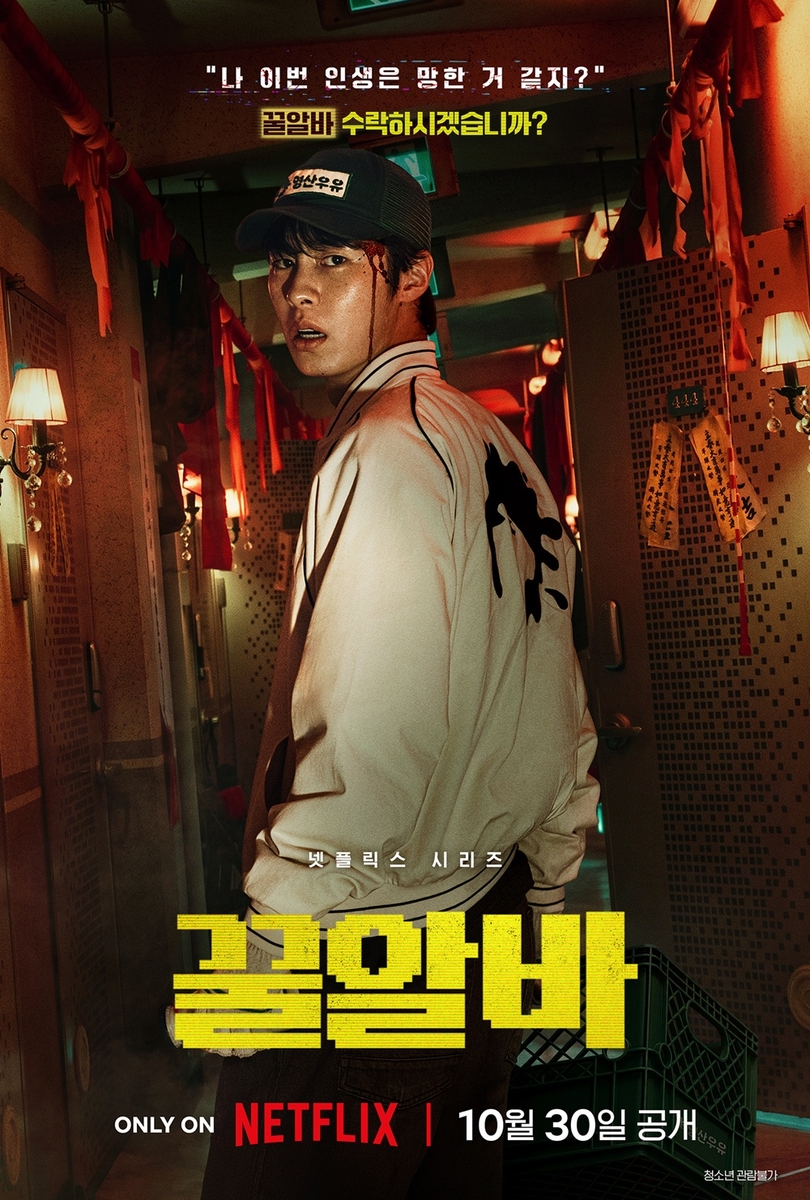
Honey Job, starring Lee Jae-wook, reached 5 million views in three days and #4 on Netflix's non-English show chart. It dresses labor satire in internet-legend horror.

Netflix's Honey Job (꿀알바), starring Lee Jae-wook, logged 5 million views in its first three days and ranked fourth among non-English shows on Netflix's global Top 10, according to the Tudum figures cited on the 4th. It reached No. 1 on South Korea's series chart right after its October 30 release and entered the Top 10 in 51 countries, including Brazil, Egypt, France, Germany and India.
The numbers are notable for a horror series built on a very local anxiety: debt, precarious work and the fear of missing next month's rent. For years Korean thrillers have used money as a plot engine, and Honey Job pushes that idea into the supernatural. (Netflix counts a "view" as total hours watched divided by runtime.)
A part-time job that pays 50 times minimum wage
Lee plays Byun Hyuk-joon, a young man who lost more than 100 million won to a jeonse (lump-sum rental deposit) fraud. He is about to jump from a Han River bridge when he spots a flyer for a high-paying day job and heads to a staffing agency called Geomi Inryeok, run by a boss played by Lee Hee-joon.
The boss offers work that pays 50 times the minimum hourly wage. Like a game quest, each completed job raises the next day's pay by at least double. There is one condition: nothing that happens on the job can ever be spoken of outside.
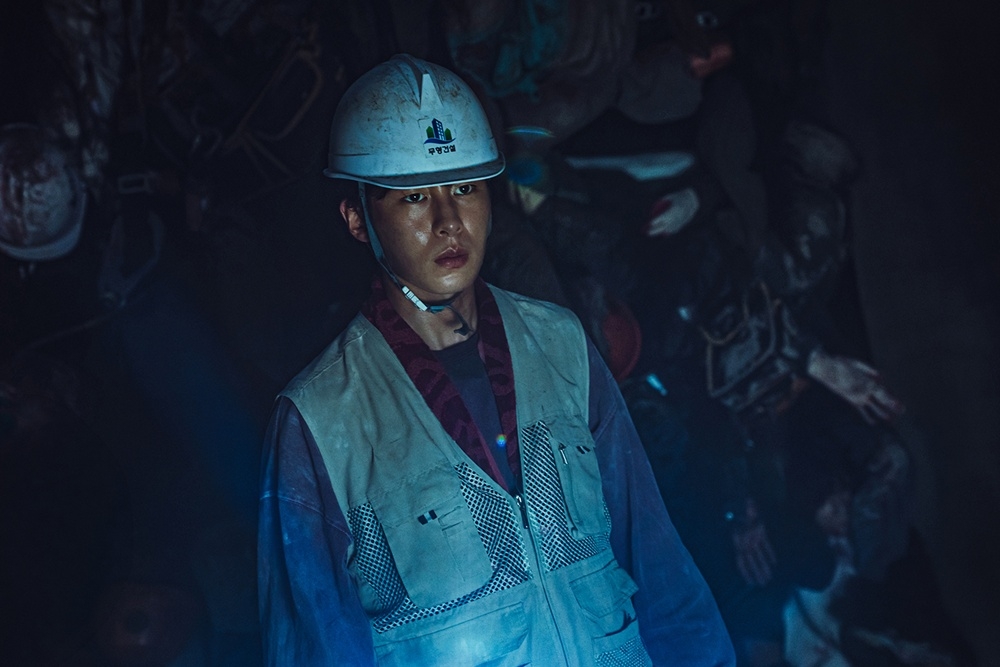
The title twists the Korean slang "kkul-alba," a cushy part-time job with high pay and easy conditions. Hyuk-joon works a convenience store night shift, a milk delivery route, a construction day-labor site and a theme park mascot costume. Each ordinary workplace hides baffling rules and life-threatening events.

Why he keeps going back
A typical horror protagonist runs. Hyuk-joon survives close calls and returns anyway: to pay off his debt, to buy his younger sister Ji-yoon (Kim Min-ha) shoes for a job interview, and to cover hospital bills for his friend Gwak Byeong-cheol (Lee Seok-hyung), who was injured at work and never compensated by his employer.
That is where the series locates its fear. In one line from the show, Ji-yoon says that ghosts are not the scary part, being broke is. The point is that a worker who cannot afford next month's rent cannot stop working, even facing a monster.
Borrowing the grammar of online legends
The delivery borrows from internet horror. Honey Job draws on "Napolitan" legends, which present strange rules without explaining the danger, and on the SCP Foundation, a fictional organization that contains and manages supernatural entities. Both withhold what the threat actually is and hand over only the rules for surviving it, which resembles workers who follow unreasonable orders without knowing the risk, or while accepting it.
Drama critic Yoon Suk-jin, a Korean literature professor at Chungnam National University, said the series stands out in both its awareness of the problem and its method. Fantasy rooted in fear, he said, portrays labor conditions "more powerfully and realistically than any other approach."
The fear also runs across generations. Hyuk-joon's father (Baek Hyun-jin), who lost everything after co-signing a loan, took the same kind of dangerous work through Geomi Inryeok, hoping to buy his family an apartment, and never returned. Eum Yeon-ju (Go Min-si), an accident investigator at a labor-injury protection agency, was a worker at the Gyeongil textile mill 40 years earlier, fighting for survival and dignity. Her story recalls the real 1978 Dongil Textile incident, in which excrement was thrown at female workers.
Yoon read the 40-year span as a cruel, tragic view of the world, one that symbolically shows the problem is a structural contradiction and cannot be solved by individual effort.
International reception
Foreign outlets have also noticed the labor satire. Forbes wrote that capitalism had "finally" outdone workplace horror films, asking why monsters are needed when so many people already live in dread of rent, debt collectors and emails opening with a variation of "circling back on the matter we discussed." It said the series grasps that irony and then adds real monsters to make the absurdity explicit, calling it a comedy for office workers who have ever imagined setting the break-room microwave on fire.
Trending Now
- 1
NewJeans' ADOR Contract Let the Label Clone Their Voices With AI After 2029
K-Pop · November 5, 2026
- 2
Shin Min-a's $12,690 Gown Fuels Lighting Debate Around The Remarried Empress
K-Drama · November 5, 2026
- 3
Kim Ji-won's Dr. X Bows 90 Degrees for a Team, and Only Three Doctors Answer
K-Drama · November 6, 2026
- 4
T.O.P Apologizes 3 Weeks After His 20-Year Fan Site Shut Down in Protest
K-Pop · November 3, 2026
- 5
Supermodel Kim Ja-yeon Marries Ex-Samsung President Young Sohn, 25 Years Her Senior
Culture · November 3, 2026
More from Soo Park
Liar: Seo Hyun-jin Breaks Into Yoo Yeon-seok's Home After Polygraph Setback
K-Drama · November 6, 2026
ALICE's Sohee Has a Husband 15 Years Older, but Fans Fixate on His Shoulders
K-Pop · November 5, 2026
The Restaurant Said No to Cameras, Yet 'Jeon Hyun-moo Plan 4' Aired It With Permission
K-Pop · November 5, 2026
End of story. The OMONAR Desk.
Don’t hear it from the group chat.
Comebacks, castings and chaos, filed by the desk.
Weekly · Free · Leave whenever