aespa, NCT 127, NCT Dream: The 3 Shows That Define SM's Concert Blueprint
SM Entertainment's concert directors break down the design philosophy behind aespa, NCT 127, and NCT Dream's recent tours. Their answer: treat every flaw, absence, and venue quirk as raw material.

When two NCT 127 members were sitting in the audience on leave from military service while five stood on stage at KSPO Dome this month, SM's production team didn't try to paper over the gap. They built the whole second act around it.
That choice, facing a deficit rather than disguising it, is the clearest window into what separates SM Entertainment's concert production from the rest of K-pop's live landscape. In a written interview published on the 25th, SM's two lead concert directors laid out the philosophy and the process behind recent Seoul shows by aespa, NCT 127, and NCT Dream, and the picture that emerges is less a behind-the-scenes reveal than a masterclass in how live performance can function as a third dimension of an album.
The setlist as drama, not a playlist
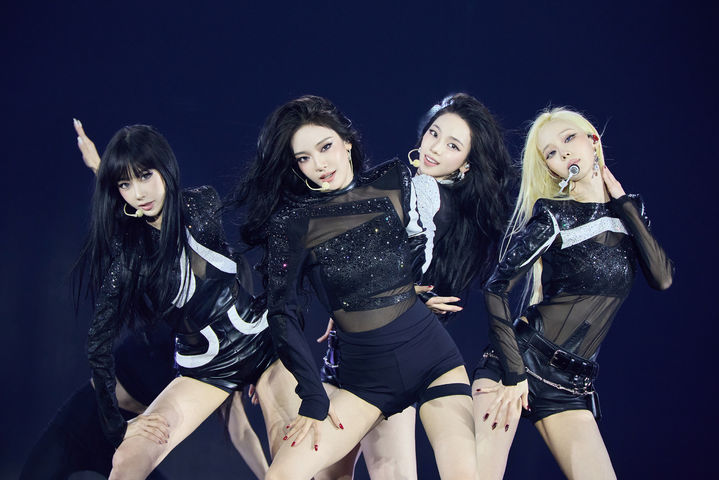
Kim Myung-seok, who directed aespa's concert, is blunt about where the planning starts. "The first priority is thinking from the artist's perspective, where they stand right now and what they need," he said. For aespa's fourth world tour, SYNK : COMPLæXITY, which landed at Gocheok Sky Dome in August, that meant foregrounding the group's most distinctive IP asset: ae-aespa, the virtual alter-ego figures that have been part of the group's lore since debut. The show was structured in five acts tracing the journey from the original system anomaly to the reclaiming of the members' true selves, effectively staging aespa's origin story as a coming-of-age narrative and, in the directors' framing, announcing the group's "third chapter."
The crack special effect, which split the main screen apart to visualize a glitch in the virtual world, was the show's visual signature. A heavily metal-arranged version of Armageddon followed, with flag-bearing performers advancing in formation, the group's signature "steel" sonic identity translated into something that felt genuinely physical, closer to a battle scene than a pop concert.

NCT Dream's Gocheok show last July took a different temporal angle. Built around the fifth studio album Go Back To The Future, the concert sent the members through a narrative about the incompleteness of youth, the idea that dreaming, by definition, means acknowledging what you don't yet have. NCT 127's fifth tour, NEO CITY – THE REDLINE, currently running at KSPO Dome, frames a decade of the group's history as the dramatic climax the entire discography was building toward.
Kim Kyung-chan, who directed the NCT 127 shows and serves as a senior producer at SM's concert planning and production center, described the structure clearly: "We designed scenes that highlighted Taeyong and Jaehyun rejoining the lineup and pushed NCT 127's identity hard in the opening section. The back half was about burning the latest album's imagery into the audience's memory, the Hummer from Piñata, the fighter jet from Blingy."

Venue as instrument
SM's spatial design process starts with narrative and works outward to the room. Kim Kyung-chan explained that once the overall story is set, the team identifies key visual objects that serve it, then adapts those objects to whichever venue they're working in. The venue's existing architecture isn't a constraint, it's material.
Gocheok Sky Dome is a baseball stadium, which means it has a foul net that can't be removed and would normally create obstructed sightlines. SM's team turned it into a projection surface for laser mapping, producing images that were literally only possible in that specific room. The dome's white ceiling became the canvas for NCT Dream's massive overhead projection mapping sequence. KSPO Dome offered a different set of possibilities: a ceiling grid rated for heavy rigging loads (meaning complex set pieces could be suspended and flown) and a band of arena LED strips running along the audience walls that made precision laser work viable throughout the space.
For NCT 127, that combination enabled a stage described in almost oxymoronic terms by the production team: "a burning glacier." About 100 lasers cutting through near-total darkness, a metallic sound design that felt cold and architectural, and then the five members generating heat inside it. The contrast between the frozen precision of the technology and the raw physicality of the performance was, by design, the point.

Absence as narrative
The section of the interview that will resonate most with NCT fans is Kim Kyung-chan's account of handling Doyoung and Jungwoo's military absence during the NCT 127 run. Both are central to the group's vocal identity, ballads and melodic centrepieces tend to depend on them, and their absence is impossible to hide.
SM's answer wasn't to redistribute their parts or minimize the gaps. It was to widen the five remaining members' spatial range on stage, increasing the physical density of their movement to fill the room differently. Then, at the show, Doyoung and Jungwoo were in the audience on leave, watching. Younger labelmates from NCT Wish were also there. The frame Kim Kyung-chan described, five members on stage, two watching from the crowd, juniors taking in the performance, turned an absence into something resembling a generational relay.
"Audiences connect with artists most when they see them facing a challenge," he said. "Human beings spend energy trying to fill what's missing. A concert is exactly the kind of moment that demands that energy at maximum. When artists show a vision for how they're facing and working through that, that's when fans find the strength to keep loving them."
NCT Dream's show worked the same logic from a different direction. The premise that dreaming means declaring yourself incomplete became the basis for a genuine exchange between the members and their fanbase, Czennies: each filling in what the other lacks.
The choreography-technology balance
SM is credited with pioneering the role of the performance director in Korean live production, a position that sits between the stage director and the choreography team, calibrating the collision between technical precision and physical output. Kim Myung-seok and Kim Kyung-chan described the process in practical terms: once the setlist is locked, they sit with the performance director to map the stamina curve across the full show, identifying which sections should hit with full choreography and which should open up for direct audience interaction.
In songs where the music and the performer's presence are enough, they strip the production back deliberately. In sections where the concept needs to land visually, they propose a spatial framework and let the performance director build detailed blocking inside it, while the A&R team aligns the arrangement direction. SM's openings follow a distinctive logic, minimal talking, consecutive performance from the first moment, because the goal is to push through the show's intensity threshold with the artist's body before the audience has time to settle.
"The ideas come from the director," Kim Myung-seok said, "but in the end, everything depends on the artist actually generating that energy. The credit belongs to every SM artist who has done it through sheer will and preparation."
SM turns 30 this year, and the SMP (SM Music Performance) philosophy that H.O.T. introduced in the mid-1990s has been recalibrated through every generation since. What these three recent productions suggest is that the method hasn't calcified into formula. The architecture changes with each venue, the emotional stakes shift with each tour chapter, and the standard for what a K-pop concert can mean, as storytelling, as spatial design, as a record of a group's actual life, keeps moving.
Trending Now
- 1
T.O.P and Nana Have Been Dating for 5 Months After His Music Video Shoot
K-Pop · October 2, 2026
- 2
Kwon Mina Claims She Was Sedated: '11 Years Is Different From One Incident'
K-Pop · September 27, 2026
- 3
Seonghun Returns to Drama After 3 Years as a Cold-Blooded Entertainment CEO
K-Drama · September 29, 2026
- 4
Where to Actually Buy Korean Fashion Online
K-Fashion · August 24, 2026
- 5
Lee Min-woo and Wife Move Out After 7-Person Household and TV Exit
Culture · September 29, 2026
More from Min-Ji Han
MEOVV Drop GO HARD on October 12, Their Fastest Turnaround Yet
K-Pop · October 3, 2026
BTS Kicks Off South America Tour With 14 Shows Across 5 Cities
K-Pop · October 3, 2026
Im Si-wan and Seol In-ah's tvN Thriller Romance Premieres October 19
K-Drama · October 3, 2026
End of story. The omonar! Desk.
Don’t hear it from the group chat.
Comebacks, castings and chaos, filed by the desk.
Weekly · Free · Leave whenever