BIGBANG, BLACKPINK, 'Gangnam Style': The 30-Year Story of YG Entertainment
YG Entertainment, the label behind BIGBANG and BLACKPINK, marks its 30th anniversary in 2026 having reshaped K-pop's sonic identity through hip-hop and Black music influences. From introducing lightsticks at concerts to opening the YouTube era with PSY's 'Gangnam Style,' the company has left a string of industry firsts across three decades.

YG Entertainment turns 30 this year, and the company's anniversary arrives with its flagship act already back in motion: BIGBANG released a new single titled Biiig on August 19 and is set to open a large-scale world tour at Goyang Stadium on August 21. For a label that has spent three decades accumulating firsts, the timing feels characteristic.

Founded on May 20, 1996, by Yang Hyun-suk, a former member of the pioneering group Seo Taiji and Boys, YG began as a small operation called Hyun Entertainment before cycling through two name changes and settling on YG Entertainment in 2001. Its early catalog was narrow but pointed: the duo Jinusean arrived in 1997 with straightforward hip-hop and R&B, followed by 1TYM in 1998, whose run of hit singles blended hip-hop production with idol-group structure in a way that would define the label's sound for years. Where SM Entertainment was building choreography-driven pop and JYP Entertainment was leaning into accessible dance music, YG was carving out a different lane.

The 2000s widened that lane considerably. A partnership with the agency Mboat brought in R&B vocalists Wheesung and Gummy, along with vocal group Big Mama, sparking what critics described as an R&B wave in Korean pop. Solo artist Seven, who debuted in 2003, briefly made Heelys fashionable in Korea, a footnote that nonetheless illustrates how YG's acts moved culture beyond the music itself. Female rapper Lexy debuted that same year and found a commercial audience, reinforcing the label's reputation for acts rooted in Black music traditions: hip-hop, R&B, new jack swing, reggae.
BIGBANG and 2NE1 changed the label's scale entirely. BIGBANG debuted in 2006 after a reality documentary, Real Documentary BIGBANG, that tracked the group's formation through a self-produced survival format. That show is now widely credited as the template for the in-house survival program, a format that has since become standard across the Korean idol industry. BIGBANG's chart dominance over the following decade was substantial: the group became the first act to place songs in the annual top 10 across the 2000s, 2010s, and 2020s, a span that includes Lies, which held the top spot on the Melon daily chart for 38 consecutive days.
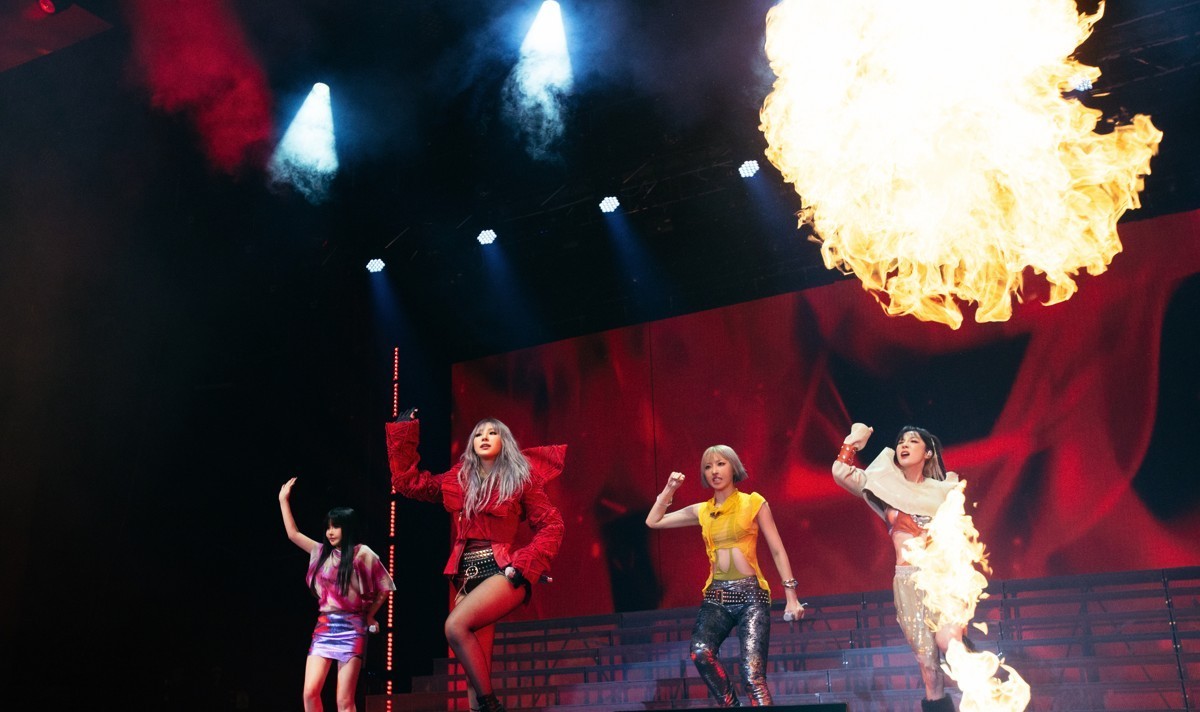
2NE1 debuted in 2009 with a girl-crush concept that separated them visually and sonically from most girl groups active at the time. Their debut single Fire reached the top of the charts immediately, and the group went on to win both the rookie award and the grand prize at year-end music ceremonies that same year. Their self-produced variety show 2NE1 TV ran to three seasons and is frequently cited as an early example of the idol-driven entertainment content that now fills streaming platforms globally. 2NE1 also holds the distinction of being the first Korean girl group to undertake a world tour.

The shift toward a global audience came clearly into focus in 2012. PSY, who had joined YG in 2010, released Gangnam Style and spent seven consecutive weeks at No. 2 on the Billboard Hot 100, the highest position a Korean act had reached on that chart at the time. The music video's comic, low-budget aesthetic translated unusually well on YouTube, then still establishing itself as a primary distribution channel for pop music. Gangnam Style became the first K-pop video to cross 100 million views on the platform, then continued past 1 billion, 2 billion, and eventually the 6 billion mark where it sits today. A YG representative noted that the shift from music as something you hear to something you watch was one the label moved into early, and PSY's video was the proof of concept.
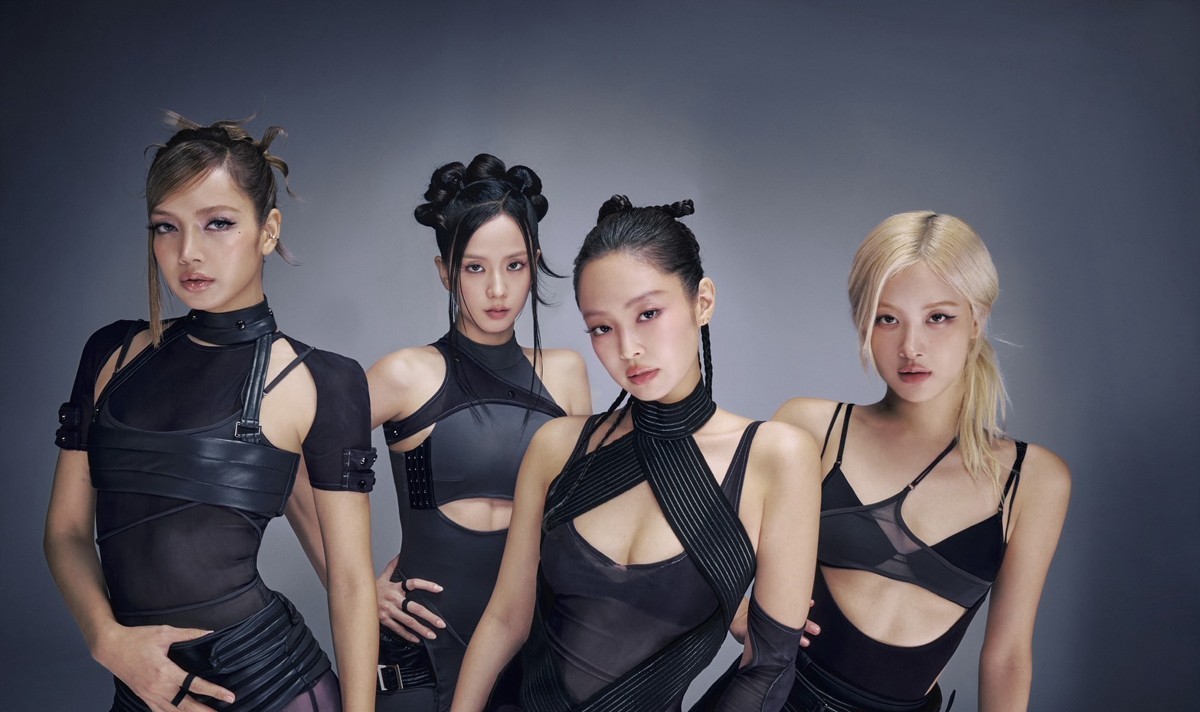
BLACKPINK, who debuted in 2016, extended that global trajectory in ways that are harder to overstate. The group became the first act worldwide to reach 100 million subscribers on YouTube. Their 2022 album BORN PINK debuted at No. 1 on both the Billboard 200 and the UK Official Albums Chart Top 100, making BLACKPINK the first K-pop girl group to top both charts simultaneously. The last act to achieve that particular combination was Destiny's Child in 2001. All four members have since built solo careers and hold ambassador roles with major luxury fashion brands, a commercial footprint that extends well past music.
One detail from YG's history that tends to get less attention outside Korea is the lightstick. YG introduced concert lightsticks, first for Seven and then the iconic Bang Bang stick for BIGBANG, before the format had become standard practice. The LED lightstick is now a near-universal feature of K-pop concerts, used to coordinate crowd visuals with stage production in real time. The company describes it as one of the moments where it helped move K-pop from passive listening to participatory experience, and the claim holds up.

As of 2026, YG's active roster includes TREASURE and girl group BABYMONSTER, with a new boy group expected to debut next month. Whether the next generation can sustain the label's pattern of outsized influence is an open question, but the structural conditions that produced the earlier runs, in-house production, a consistent Black music foundation, and an early instinct toward visual platforms, remain in place.
Critic Lim Hee-yoon, a Korean popular music commentator, put YG's broader contribution plainly: the label gave K-pop its hip-hop backbone, and in BIGBANG and 2NE1 it created a model of the idol who carries individual charisma rather than just group cohesion. That model has been replicated widely enough that its origins are easy to forget.
Trending Now
- 1
T.O.P and Nana Have Been Dating for 5 Months After His Music Video Shoot
K-Pop · October 2, 2026
- 2
Kwon Mina Claims She Was Sedated: '11 Years Is Different From One Incident'
K-Pop · September 27, 2026
- 3
Where to Actually Buy Korean Fashion Online
K-Fashion · August 24, 2026
- 4
Lee Hyori's LA Photos at 25 Still Look Like They Were Shot Yesterday
K-Pop · October 3, 2026
- 5
Seonghun Returns to Drama After 3 Years as a Cold-Blooded Entertainment CEO
K-Drama · September 29, 2026
More from Soo Park
Hong Yugyeong Left Apink in 2013: Now She's Weeks Away From Giving Birth
K-Pop · October 3, 2026
AI-Voiced Song Reaches Melon Top 20, Competing Alongside IU and Top K-Pop Acts
K-Pop · October 2, 2026
MEOVV's Anna Tops Fan Poll for Best Celebrity Getty Images Shots
K-Fashion · October 2, 2026
End of story. The omonar! Desk.
Don’t hear it from the group chat.
Comebacks, castings and chaos, filed by the desk.
Weekly · Free · Leave whenever