Ji Soo Takes His First Villain Role in the Philippines, 5 Years After Korea Departure
Five years after admitting to school bullying and exiting a KBS drama mid-production, actor Ji Soo is now playing a cold-blooded villain in a Philippine prime-time series. A related lawsuit was recently settled at roughly 880 million won in damages.

Five years after a school bullying admission forced him off a KBS drama and out of the Korean entertainment industry, actor Ji Soo is now one of the central figures in a Philippine prime-time action series. The trajectory is a fairly unusual one for a Korean actor whose domestic career effectively ended under those circumstances: rather than waiting out the controversy at home, he rebuilt methodically in the Philippines, signing with GMA Network's talent management arm Sparkle and accumulating four productions over two years.
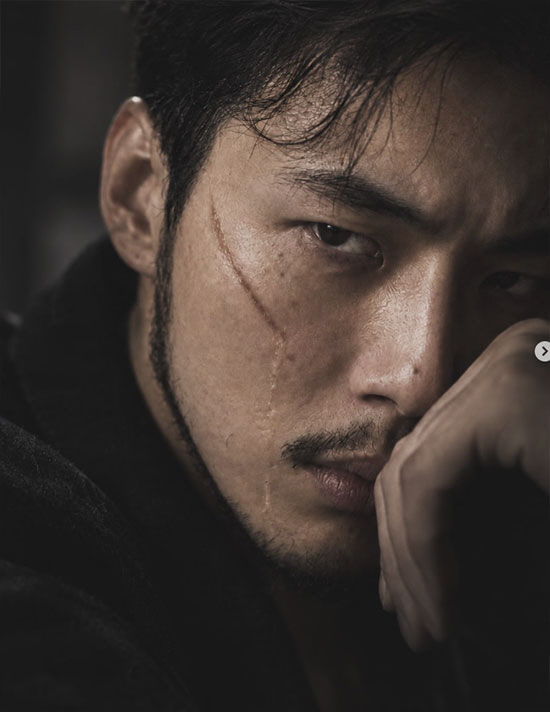
On the 14th, Ji Soo posted on his social media, sharing a photo set from the set of Taskforce Firewall, a GMA Network action drama currently airing weeknights at 8:50 p.m. on GMA Prime. The caption read: "On set as Dong Hyun, Off set with family. Lovely September days." The images showed him in heavy character makeup, a long prosthetic scar crossing one side of his face and several days of beard growth, projecting a harder register than anything from his Korean career.
The role and how he prepared for it
In Taskforce Firewall, Ji Soo plays Dong Hyun, described by GMA as the mastermind behind a sexual extortion and blackmail crime syndicate. The character has been a recurring presence in recent episodes, positioned as the key antagonist the task force is working to expose.
In interviews with Philippine media, Ji Soo said that while he had done action work in earlier GMA productions, Dong Hyun is his first fully committed villain role. To prepare for the character's emotional coldness and suppressed affect, he studied villain performances across several films, working out how those actors conveyed menace without telegraphing it. The resulting look on screen, all flat stares and controlled stillness, reflects that preparation.
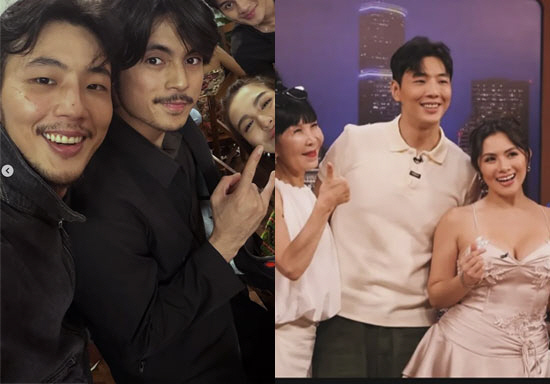
The same social media post showed him taking selfies with Filipino co-stars on set and posing with the cast and hosts of a local variety program, suggesting he has settled into the production's social fabric, not just its cast list.
How he got here
Ji Soo's path to this point ran through a low-profile re-entry. In 2024, he made a guest appearance in the Philippine action drama Black Rider, which functioned as a soft return to screen work without the weight of a lead role. That appearance led to his Sparkle contract, and from there he moved into Never Say Goodbye and then Love, Siargao, the latter of which is scheduled to air on GMA following its streaming release.
He also appeared on the Philippine talk show KALURKS!, where he was asked about dating Filipino women. He said he was "very open" to the idea and that he does not consider nationality a factor: "Love can happen anywhere." When a co-host raised the name of presenter Ashley Rivera, he responded warmly. The segment read as standard variety charm work, the kind of local press a foreign actor does when trying to build audience familiarity in a new market.
The lawsuit that just closed
Back in Korea, the legal aftermath of his 2021 departure was settled only recently. When Ji Soo dropped out of the KBS2 drama River Where the Moon Rises after his written apology and bullying admission, production had to recast the male lead and reshoot significant portions. The production company subsequently sued KeyEast, his former agency, for damages.
That case has now concluded: KeyEast withdrew its Supreme Court appeal, allowing a second-instance ruling to stand. The judgment requires KeyEast to pay the production company approximately 880 million won. The sum reflects the scale of disruption a mid-production cast change creates, and it sets a reasonably concrete reference point for what a bullying controversy can cost a management company financially, beyond the reputational damage.
Ji Soo himself terminated his contract with KeyEast after stepping down from the drama. He has not returned to Korean television or film work since.
More from Soo Park
Song Hye-kyo Shares Lace-and-Sequin Evening Photos Before Slowly, Intensely Debut
K-Fashion · September 17, 2026
Kim Ji-won's First Variety Appearance in 10 Years Lands on Yu Quiz Before October Drama
K-Drama · September 16, 2026
Go Soo Parts Ways With BH Entertainment After 15 Years Together
K-Drama · September 16, 2026
End of story. The omonar! Desk.
Don’t hear it from the group chat.
Comebacks, castings and chaos, filed by the desk.
Weekly · Free · Leave whenever