Kim Min-hee's son could inherit equally from Hong Sang-soo, but she gets nothing under Korean law
Kim Min-hee gave birth to director Hong Sang-soo's son in April of last year, and legal analysts say the child can be formally recognized and inherit on equal footing with Hong's existing daughter. Kim herself, however, has no spousal inheritance rights because Hong remains legally married to someone else.

Kim Min-hee made her first public appearance alongside director Hong Sang-soo after the birth of their son at this month's Locarno International Film Festival in Switzerland, where she won the best acting award for his new film Nundulde ga Eomne (literally, Nowhere to Look). At a post-screening audience Q&A, she spoke openly about the two years she spent away from work after giving birth, saying her internal state had changed considerably, and described bringing the infant to the set so she could breastfeed and prepare solid food between takes.
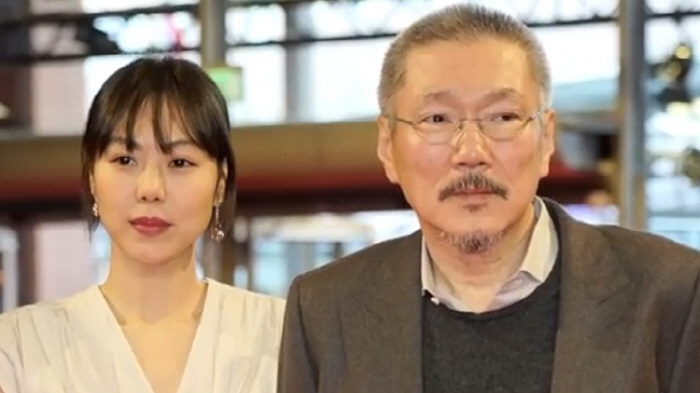
The public return has drawn renewed attention to a legal question that has been building since the child was born: what rights does the boy actually have, and what rights does Kim have?
What Korean civil law says about the child
Because Hong's previous marriage was never dissolved, Kim and Hong's son is classified under Korean civil law as a honin-oe chulsaengja, a child born outside of legal marriage. The distinction matters procedurally more than it does for outcomes. Kim, as the birth mother, can register the boy under her own family register without any additional steps. The father's side requires a separate legal process called inji, formal recognition of paternity.
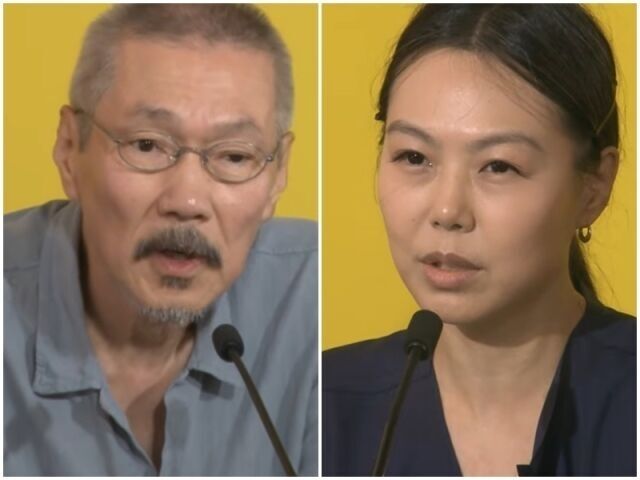
If Hong files that recognition, the child would be entered into Hong's family register alongside his existing daughter from his legal marriage. Yang Na-rae, a divorce attorney at law firm Nare, explained in a television interview on the 29th that once recognition is completed, the two children would be recorded in sequence and would hold identical legal standing as direct lineal descendants.
On the inheritance question, Korean civil law does not penalize a child for being born outside of marriage once paternity is formally recognized. Both children would become statutory heirs in equal proportion, without any deduction based on how or when they were born.
Where Kim Min-hee's position differs sharply
The legal picture for Kim herself is considerably less protected. Hong has been legally married since 1985, when he met his wife while studying in the United States. He filed for divorce in November 2016, but the Seoul Family Court rejected the petition in 2019, finding that Hong bore primary responsibility for the breakdown of the marriage. He did not appeal, and the legal marriage has remained intact ever since.
That status is decisive for inheritance purposes. Under Article 1003 of Korea's Civil Act, spousal inheritance rights belong exclusively to the legal spouse. Hong's wife, as the party who holds that status, would inherit alongside any recognized children and receive an additional 50 percent premium on top of the children's combined share. Kim, as someone in what Korean law terms a jungsanjeok sassilhon, a de facto marriage that overlaps with an existing legal one, is not entitled to any of that protection regardless of how long the relationship has continued.
Yang put it plainly: if Hong were to die without divorcing, his legal wife would receive spousal inheritance rights and Kim would receive nothing.
A decade-long relationship with unresolved legal questions
Hong and Kim first worked together on his 2015 film Right Now, Wrong Then, and their relationship became public in 2016. Hong stated publicly the following year that they were in love. His wife at the time said she did not intend to divorce him and expected him to return to the family. Nearly ten years later, the couple are raising their son together, with Hong's legal marriage still on record.
The gap between how Korean civil law treats the child and how it treats Kim is a fairly clean illustration of how the country's family registration system is structured: lineage and paternity can be corrected through administrative procedures, but spousal rights attach to legal marriage and do not follow the lived relationship. For their son, a path to full legal recognition and equal inheritance exists. For Kim, that path would require Hong's divorce first.
Trending Now
- 1
SM Gets US Court Order in 9 Days to Unmask RIIZE Seunghan Comeback Accounts
K-Pop · October 17, 2026
- 2
SHINee's Taemin Meets Son Heung-min After a Falcon Launch in a TAEMIN 93 Jersey
K-Pop · October 16, 2026
- 3
Where to Actually Buy Korean Fashion Online
K-Fashion · August 24, 2026
- 4
Kim Yoo-jung and Park Jin-young's 100 Days of Lies Tops Its Slot at 8.3%
K-Drama · October 13, 2026
- 5
Ten Theqoo Replies, Five Animal Faces: Kitty and Wolf Types Win Out
Culture · October 15, 2026
More from Soo Park
Why Does Kim Yoo-jung's Character Quit Over a Test Set by Her Own Allies in 100 Days of Lies?
K-Drama · October 19, 2026
Lee Jung-jae's Studio Drops 'Artist' From Its Name Less Than Two Years After Launch
K-Drama · October 19, 2026
Trauma Center Seasons 2 and 3 Shoot Together as Jeong Ye-in Replaces Ha Young
K-Drama · October 19, 2026
End of story. The OMONAR Desk.
Don’t hear it from the group chat.
Comebacks, castings and chaos, filed by the desk.
Weekly · Free · Leave whenever