Tzuyang Jokes About Eating Less as YouTube Demonetizes Mukbang Creators
YouTube has tightened its eating-disorder guidelines, suspending monetization and deleting hundreds of videos from Korean mukbang channels. Tzuyang, the genre's biggest creator, made light of the shift in a new video while continuing her usual large-scale eating.

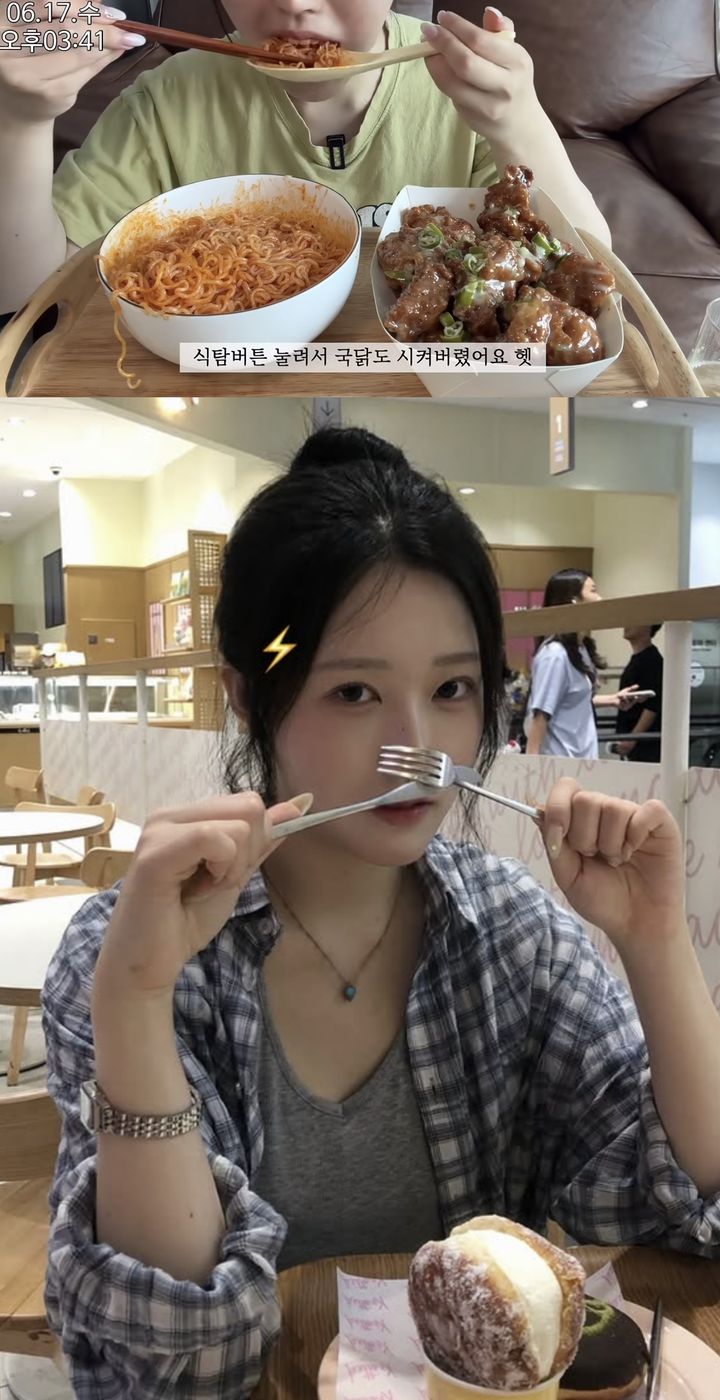
Tzuyang, the most-watched mukbang creator in South Korea, slipped a dry remark into her September 21 video filmed at Incheon's Sinpo International Market: eating a lot, she noted, is apparently no longer the trend, so she would become a creator who eats in moderation. The comment landed with extra weight because it came in the middle of a genuine industry crisis.
YouTube has been tightening enforcement of guidelines that restrict content related to eating disorders, binge eating, and behaviors such as hoarding food, hiding it, or misusing laxatives. The platform now bars advertising revenue from any video it determines could encourage viewers to imitate those behaviors, and crucially, the policy applies retroactively. Past videos are being reviewed alongside new uploads, which means creators are losing income and content they built over years.
A disruption years in the making
The practical consequences have already surfaced publicly. Creator Salbbaejo posted a notice to her channel telling followers that her monetization had been suspended and that she had paused all uploads while working with her management to understand which videos triggered the restriction. "I don't know which videos will be flagged," she wrote, "so I've stopped uploading until this is resolved."
Creator Miso described a slower-moving version of the same problem. She said she received her first guideline-violation notice from YouTube in mid-March, followed by a second at the end of the month along with word that her channel's monetization was being temporarily suspended. On the 15th, she published a video explaining why she had deleted four years' worth of content, a decision that reflects how exposed creators feel when retroactive enforcement is in play and the rules are not clearly defined.
YouTube tightened its advertising policy and expanded its monitoring scope this month, formalizing restrictions that had apparently been applied inconsistently before. The category of content now subject to full demonetization includes not just explicit binge-eating formats but anything the platform judges likely to be imitated in harmful ways by viewers, a broad standard that leaves considerable room for interpretation.
The genre's central tension
Mukbang, which emerged in South Korea around 2010 and became a global format on YouTube, has always occupied an ambiguous space in platform policy. Its appeal is partly scale: viewers tune in for the volume of food consumed, the social energy of watching someone eat, and the particular pleasure of foods they might not try themselves. That same scale is now the liability.
For Tzuyang, whose channel has tens of millions of subscribers, the regulatory shift is more of a strategic question than an existential one. Her Sinpo market video ran through fried chicken, tteokbokki, tempura, fish cakes on sticks, and buckwheat noodles, the same format her audience has always watched. The pledge to eat in moderation was clearly made with a smile. Whether that lightness holds as YouTube's enforcement becomes more systematic is something the next few months will clarify.
Trending Now
- 1
Ko Ji-yong Files Injunction Against Ex-Wife After Seeing His Son Only 6 Times in 2 Years
Culture · Updated September 17, 2026
- 2
Ji Suk-jin Tells Lee Kwang-soo to Marry After 9 Years: Kwang-soo's Comeback Stops the Room
Culture · September 20, 2026
- 3
Fans See a Different NewJeans After 2 Years, and That's Exactly the Problem
K-Pop · September 17, 2026
- 4
LE SSERAFIM's Kazuha Let Gian84 Clip Her Toenails on Camera
Culture · September 17, 2026
- 5
Jung Jun-won Froze on Live TV, Got Called Wrong for the Role: Then the Show Hit 10.7%
K-Drama · September 16, 2026
More from Soo Park
Dahyun's Third Acting Project in Two Years Pairs Her With Cha Woomin in New Film
K-Pop · September 22, 2026
Son Ye-jin's Teenage Face in Scandal Is Pure CG, Modeled on The Classic
Culture · September 22, 2026
Angelina Danilova on 10 Years in Korea: 'I Could Never Fully Leave'
Culture · September 22, 2026
End of story. The omonar! Desk.
Don’t hear it from the group chat.
Comebacks, castings and chaos, filed by the desk.
Weekly · Free · Leave whenever