Lee Chang-dong Wins Venice Jury Prize for First Time in 24 Years With Possible Love
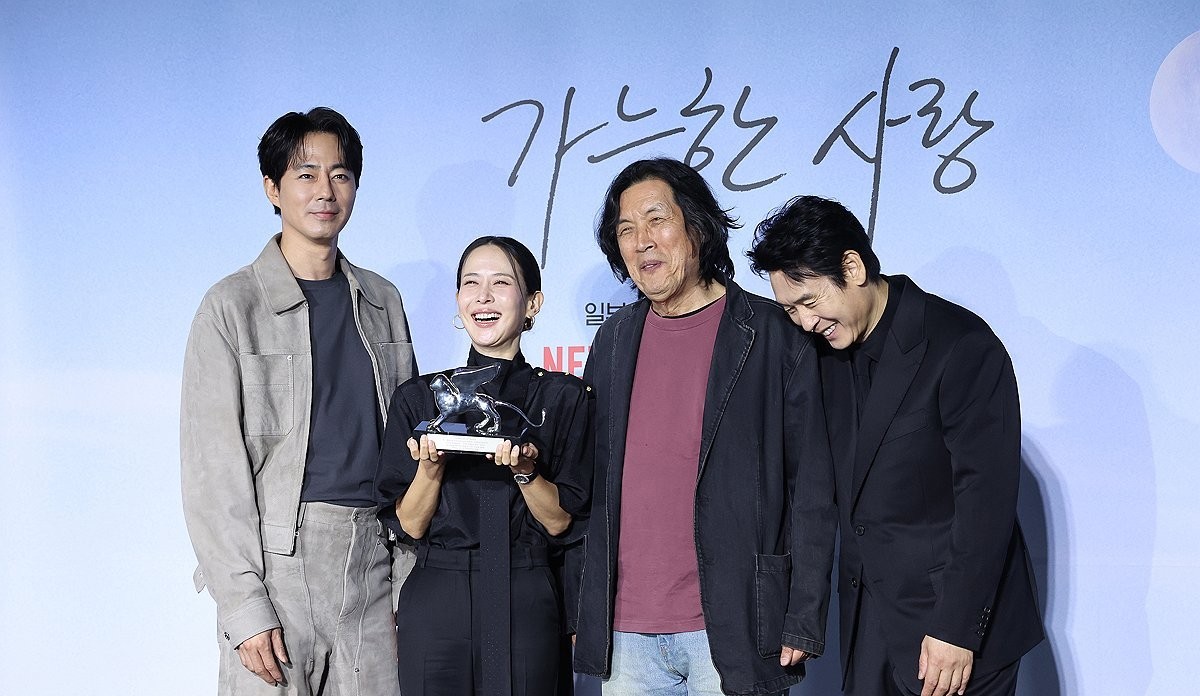
Lee Chang-dong's Possible Love took the Silver Lion Jury Grand Prize at the 83rd Venice Film Festival, his first Venice award since Oasis in 2002. The Netflix film, starring Sul Kyung-gu, Jeon Do-yeon, Jo In-sung, and Jo Yeo-jeong, opens in Korean theaters on the 23rd.

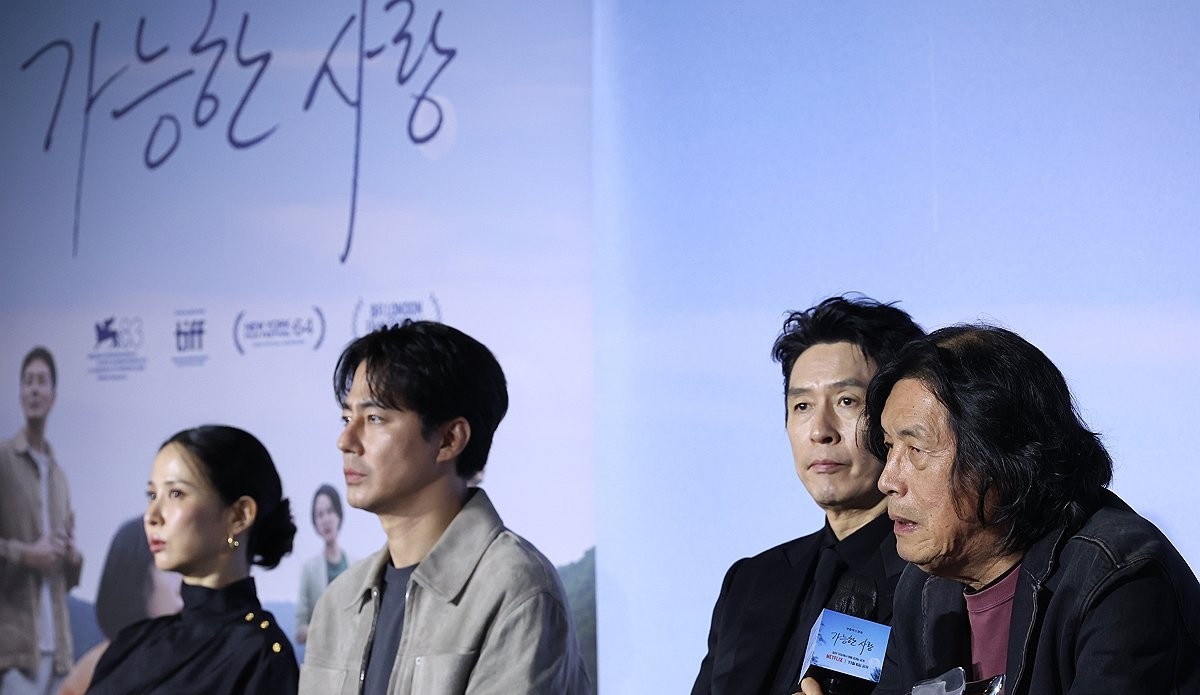
Lee Chang-dong returned to Seoul on the 21st holding the Silver Lion Jury Grand Prize from the 83rd Venice International Film Festival, his first Venice award in 24 years, and promptly turned the press conference at CGV Yongsan iPark Mall into something closer to an ethics seminar than a victory lap.
The director last won at Venice in 2002 for Oasis, which earned him the Silver Lion for Best Director. That gap between prizes is roughly the same length as the production history of Possible Love itself: Lee has been sitting with the idea since a mass layoff, strike, and violent suppression incident at a large corporation shocked him more than a decade ago.
A film that almost wasn't made
"I wasn't sure I had the right to tell that story honestly, or how close I actually was to those people," he said, explaining why he shelved the project early on. What eventually unlocked it was adding a second couple to the screenplay: a documentary filmmaker and her wealthy husband, whose presence gave the film a structural mirror for the ethical problem Lee had been unable to resolve.
Possible Love follows two couples living in very different circumstances. Hosuk (Sul Kyung-gu) is a laid-off factory worker who participated in a strike and was physically and psychologically injured during its forced suppression; his wife Miok (Jeon Do-yeon) has held the family together through the years since. Yeji (Jo Yeo-jeong) is a documentary director who grows close to the couple in order to film their lives; her husband Sangwoo (Jo In-sung) has never known financial difficulty and, on the surface at least, remains comfortable at a careful remove from other people's pain.
At the press conference, Lee was direct about the parallel between Yeji's situation and his own. "In a way, perhaps I too am living a life married to capital as a filmmaker," he said. "For a creative person who cannot tell their own story without borrowing from capital, it may be an inescapable fate." The admission gives the film's central question an additional layer: it is not only Yeji whose empathy is compromised by the money behind her.

The ethics of the camera
Yeji's filmmaking methods inside the story are deliberately uncomfortable. She trains her camera on moments her subjects would not choose to show: the chaos around a deceased strike colleague's funeral wake, the eruption of suppressed rage. Lee said the character carries a question he has carried for his entire career.
"For any creator who depicts other people's lives, you have to ask how much you can tell their story as them," he said. "Whether you can speak about their pain without consuming it or using it as material for a film is a question I have asked my whole life, and I still don't have an easy answer."
That discomfort is built into the film's form as well as its content. Scenes in which laid-off workers describe their own experiences in therapy are, by Lee's own admission, unusually long by conventional cinematic standards. He chose to keep them. "People who feel they've lost their identity by losing their work, who feel a hollowness inside themselves: I wanted to deliver their story to the audience as if it were an actual documentary. That was not something I was willing to give up."
The documentary-fiction boundary is deliberately blurred throughout. Yeji's film-within-the-film and Lee's Possible Love end up overlapping in ways that make the viewer conscious of both at once.

Four performances carrying the weight
Sul Kyung-gu described Hosuk as a man whose sense of self was shattered by the layoff, carrying compounded feelings of shame, guilt, anger, and inferiority, particularly when he encounters the relative ease of Sangwoo and Yeji's world. Jeon Do-yeon, participating via video from an overseas stage run of the theatrical production The Cherry Orchard, sent a remark that was read at the conference: money and class, she noted, can strip away a person's sense of their own value.

Both actors and their counterparts resist simpler readings of their characters. Jo In-sung and Jo Yeo-jeong play Sangwoo and Yeji not as a blunt contrast class symbol, but as people who, despite comfort, are still reaching for something they don't have. The class difference between the two couples is rendered through the texture of everyday life: living spaces, cultural habits, small gestures, the way people hold themselves in a room.

The result, Lee suggested, is a film that refuses any clean moral alignment. "The world we are living in is not simple," he said. "It conceals many complicated faces. I wanted to talk with audiences about that."
Possible Love was selected as Korea's submission for the International Feature Film category at the 99th Academy Awards. It opens in Korean theaters on the 23rd and runs 164 minutes. Rated for adults only.
Trending Now
- 1
Ko Ji-yong Files Injunction Against Ex-Wife After Seeing His Son Only 6 Times in 2 Years
Culture · Updated September 17, 2026
- 2
Ji Suk-jin Tells Lee Kwang-soo to Marry After 9 Years: Kwang-soo's Comeback Stops the Room
Culture · September 20, 2026
- 3
Fans See a Different NewJeans After 2 Years, and That's Exactly the Problem
K-Pop · September 17, 2026
- 4
LE SSERAFIM's Kazuha Let Gian84 Clip Her Toenails on Camera
Culture · September 17, 2026
- 5
Jung Jun-won Froze on Live TV, Got Called Wrong for the Role: Then the Show Hit 10.7%
K-Drama · September 16, 2026
More from Soo Park
Lee Miju Picks the Dermatologist After a Two-Man Blind Date on Her YouTube Channel
K-Pop · September 22, 2026
Seo Kang-joon and Ahn Eun-jin Can't Save a Drama Stuck at 2%
K-Drama · September 22, 2026
Dahyun's Third Acting Project in Two Years Pairs Her With Cha Woomin in New Film
K-Pop · September 22, 2026
End of story. The omonar! Desk.
Don’t hear it from the group chat.
Comebacks, castings and chaos, filed by the desk.
Weekly · Free · Leave whenever